Best of our wild blogs: 8 Aug 16


Lentor Streams
Bugs & Insects of Singapore

Mass coral bleaching at Pulau Semakau (North)
wild shores of singapore

Coastal cleanup at Lim Chu Kang, Singapore
My Nature Experiences

New Bureau to investigate marine accidents in Singapore waters
wild shores of singapore

Spider Conch (Lambis lambis) @ Tanjung Rimau, Sentosa
Monday Morgue


Read more!

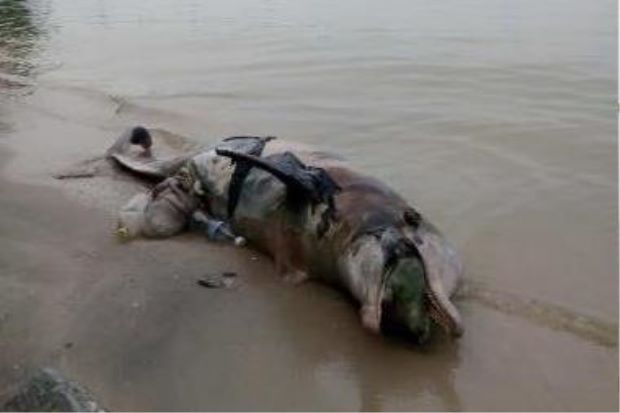
Malaysia: Dead dolphin may have choked on rubbish

The Star 8 Aug 16;

GEORGE TOWN: A dolphin carcass believed to have been choked on rubbish has been found along the beach off Pulau Jerejak.

Photographs of the carcass went viral yesterday, causing an uproar among netizens.

One person commented: “It’s sad. Maybe this dolphin died because it ate plastic floating on the surface, which it thought was food”.

Marine biologist Associate Professor Dr Aileen Tan of Universiti Sains Malaysia said it was common for turtles to choke on plastic rubbish thinking that they were jellyfish. Dolphins also make the same mistake.

“Now, the beaches are more severely polluted compared to the beaches four years ago.

“The stretch along Pantai Acheh is probably the dirtiest due to the presence of old fishing nets, plastic items and other types of rubbish,” she said yesterday.

However, Dr Tan said the dolphin should be dissected to confirm the cause of death.

The animal could have died consuming rubbish thrown into the sea by the people, she said.

Sahabat Alam Malaysia (SAM) president S.M. Mohamed Idris said he was shocked by the incident.

“It’s shocking that this is happening here in a state which is promoting a cleaner, greener and safer environment.

“Penangites have a lackadaisical attitude in maintaining cleanliness,” he added.


Read more!

Malaysia: New road will kill Kinabatangan wildlife, says researcher

RUBEN SARIO The Star 7 Aug 16;

KOTA KINABALU: A proposed road that will cut through the Kinabatangan Wildlife Sanctuary in Sabah’s east coast will cause irreparable environmental harm, an ongoing study on Bornean elephant population has reaffirmed.

Over the past six years, Danau Girang Field Centre (DGFC) researchers along with Sabah Wildlife Department rangers have placed satellite tracking collars on 14 elephants.

The latest elephant to be collared was a female on Aug 3 near the DGFC as part of a project supported by the Elephant Family, Houston Zoo and Columbus Zoo in the United States.

DGFC director Dr Benoit Goosens said the collared elephants have been providing crucial information on the movements of the large resident herd - along the river and into the different forest fragments.

The elephant herd was also tracked moving into oil palm plantations, and in the vicinity of human settlements such as Sukau, Bilit, Abai and Batu Putih villages, said Goosens, the project leader.

"The data accumulated over the years from those 14 elephants clearly show that Sukau is a hotspot for elephant movements and we can anticipate major conflicts in the area if the construction of a road and bridge bisecting the wildlife sanctuary goes ahead,” added Goosens.

He said the construction of the bridge and road near Kampung Sukau would result in elephants being killed as well as bring harm to villagers.

“I anticipate massive conflicts in the Sukau area and the government will have to fork out millions of ringgit to mitigate these problems,” Goosens added.

The construction of the road and bridge would also undermine efforts by several organisations, including state authorities, to maintain natural habitat connectivity and healthy wildlife populations, he said.

This was especially true in the case of the large and endangered mammals such as elephants, orangutan, sun bears, proboscis monkeys and clouded leopards, he said.

He noted that the Sabah government had declared the lower Kinabatangan as a wildlife sanctuary in 1999 to restore natural habitat along Sabah’s longest river, reduce illegal wildlife hunting, encroachment, and to keep wild animals safe and accessible to a large tourism industry.

“Several million ringgit have been invested to rehabilitate, reconnect, and restore the forest fragments along the river,” Goosens said.

“The Kinabatangan has attracted hundreds of thousands of tourists and generated millions of ringgit for the government,” he said.

He said it was not wise to destroy years of hard work to make this place a real corridor of life, by building a bridge and sealing a road that will split the sanctuary in three (as it is already split in two by the Batu Putih bridge).


Road not a good idea for wildlife
RUBEN SARIO The Star 8 Aug 16;

KOTA KINABALU: An ongoing study on the Borneo elephant population has reaffirmed a proposed road that goes through the Kinabatangan Wildlife Sanctuary on Sabah’s east coast will cause irreparable harm to the animals and environment there.

Over the past six years, Danau Girang Field Centre (DGFC) researchers, along with Sabah Wildlife Department rangers, have been placing tracking collars on elephants. Fourteen have been tagged so far.

The latest elephant to be collared, a female, was tagged on Aug 3 near the DGFC.

The tagging is part of a project called Elephant Family, supported by the Houston and Columbus zoos in the United States.

DGFC director Dr Benoit Goosens said the collared elephants had been providing crucial information on the movements of the large resident herd.

The herd had been seen going into oil palm plantations and the vicinity of human settlements in Sukau, Bilit, Abai and Batu Putih, said Goosens, the project leader.

“Data accumulated over the years from those 14 elephants clearly shows that Sukau is a hotspot for elephant movements.

“We can anticipate major conflicts in the area if construction of the road and bridge that bisects the wildlife sanctuary goes ahead,” he said.

He said the bridge and road near Kampung Sukau would result in elephants being killed and nearby villagers could be harmed as well.

“The Government will have to fork out millions of ringgit to mitigate these problems,” Goosens said.

Building the road and bridge would also undermine the efforts of several other organisations, including state authorities, to maintain natural habitat connectivity and healthy wildlife populations, according to Goosens.

“Millions of ringgit have been invested to rehabilitate, reconnect and restore the fragmented forest areas along the river,” Goosens said.

He also said Kinabatangan attracted countless tourists and generated millions of ringgit for the Government.


Read more!

Otter nuisance at Sentosa

Phyllis Lee, The New Paper AsiaOne 6 Aug 16;

When a Sentosa Cove resident started keeping tilapia five years ago, they bred quickly and he ended up with hundreds of them.

Now he has only two left after the rest were eaten by otters in more than 20 attacks over the past two years.

The resident, who wanted to be known only as Mr Chin, said that he and several of his neighbours have lost so many fish to the otters that they have resorted to desperate measures to keep the mammals out.

He has put up a barbed wire fence and motion sensor lights, while a neighbour has installed a low-powered electric fence.

But nature experts say these measures may not work because otters are intelligent animals that will find ways to get past these obstacles.

Last July, My Paper reported that a Sentosa Cove resident lost $64,000 after her koi ended up as otter food.

GETTING WORSE

The problem seems to have worsened since then, with about 20 home owners in the posh neighbourhood having problems with otters.

Hotels and condominiums have also been affected, with a hotel losing about $85,000 worth of fish over the past eight months.

Mr Chin told The New Paper on Wednesday that he was devastated to see his tilapia and other fish wiped out.

"Most of their bodies were not eaten.

"The otters just left the carcasses on the ground. I was shocked by the brutality and violence of the scene when I first saw it," he said.

"Nobody is helping us. We're so desperate. We just want to cohabit with the otters peacefully."

In an attempt to save his remaining fish, Mr Chin installed the barbed wire fence and motion sensor lights two weeks ago.

Another resident, Ms Constance Cheng, lost 22 of her 25 koi in two attacks last October.

She gave away the three that survived.

She had bought two koi at just $8 each and the others at $60 to $80 each.

She said: "We kept the fish for seven years.

"In terms of their worth, the sentimental value is much more than anything else."

Ms Cheng then bought five tilapia at $10 each in February.

On April 2, when she returned from Japan at about 4am, she saw an otter near her pond.

She said: "We switched on the lights and saw a dead fish on the ledge of the pond. Then we looked around and saw one otter wandering on the pontoon.

"I used the broom to chase it back into the water, but I didn't dare to go too near to it. Eventually, it jumped into the water."

Of the other four tilapia, three had vanished. She is left with the sole survivor and about 30 offspring.

About two months ago, Ms Cheng installed a battery-operated, low-powered electric fence, costing about $380, around her pond as a temporary measure to keep out the otters.

Ms Constance Cheng installed an electric fence and motion sensor lights around her pond. Photo: The New Paper

Another resident, who declined to be named, said she has seen two otters on the footpath and in her swimming pool this year.

EFFECTIVE?

The founder of nature conservation group Nature Trekker, Mr Ben Lee, 53, thinks the measures to fend off the otters would not be effective.

He said: "Motion sensor lights will not bother the otters.

The electric fence may give them a scare, but otters are strong and agile creatures.

"Whether the fences will work or not depends on their height and the density of the wire.

"If there are only a few wires, the otters can just squeeze in."

Mr N. Sivasothi, a biological sciences lecturer at the National University of Singapore (NUS), warned that such deterrents could be a hazard to children and pets such as cats and dogs.

"They are potentially dangerous in residential areas.

"Simple fibreglass barriers for koi ponds, for example, would be enough to prevent otter access," he said.

The divisional director of operations at Sentosa Leisure Management, Mr Koh Piak Huat, said it had received only a small number of otter-related feedback in Sentosa this year.

"As Sentosa is surrounded by water, the presence of these semi-aquatic mammals can be expected at the coastal areas, and we welcome them as an integral part of our island's wildlife," he said.

The Agri-Food and Veterinary Authority (AVA) received 31 instances of feedback on otters, mostly about sightings, in the whole of Singapore from January last year to June this year.

Only a small number were on nuisance issues, such as the loss of fish from private ponds to animal attacks.

A spokesman said that inspections were conducted at the affected households and the residents were advised to take preventive measures.

They include covering the fish ponds with netting or erecting a small barrier around them.

AVA added that the Otter Working Group, comprising AVA, National Parks Board, PUB, NUS, Animal Concerns Research and Education Society, Wildlife Reserves Singapore and members of OtterWatch, is working on solutions to otter issues, including those in Sentosa.

Sofitel Singapore lost $85,000 worth of fishes

The otters have hit not only homes but also hotels and resorts in Sentosa.

Sofitel Singapore Sentosa Resort & Spa has suffered one of the biggest losses so far - about $85,000 worth of arowana and koi since last December.

In a video taken two weeks ago, an otter is seen swimming and scurrying out of the resort with a fish gripped in its jaws.

General manager Frederik Deman told The New Paper on Thursday: "We have regular visits of otters eating koi. They jump inside the ponds and take the fish.

"We have tried everything, including reinforcing the security and CCTVs (closed-circuit television), but it is not easy to stop the otters. We have not bought any fish since March."

Amara Sanctuary Resort Sentosa lost more than 50 ornamental fishes during the period - late last year till June - when otters were seen in the resort.

Remains of the fishes were found around the pond after the resort's associates saw the otters feeding on them.

Its spokesman said: "The otters were able to discern their prey by consuming only the larger fish, and (choosing) to ignore the fingerlings and smaller fish remaining in the pond. The otters have not been seen on the property since June.

"The management is reviewing these incidents and considering alternative measures to protect the fishes while not posing a risk of harming the wildlife."

FISHES MOVED

Last year, Shangri-La's Rasa Sentosa Resort & Spa relocated fishes in its pond after some of them disappeared during the time otters were seen on the island, The Straits Times reported.

A spokesman for the resort said it has not had problems with otters of late.

A few condominiums on the island also had their fishes taken by otters and their ponds have been empty for one to two years.

The divisional director of operations at Sentosa Leisure Management, Mr Koh Piak Huat, said: "Our priority has always been the safety of all guests and stakeholders on the island, and we urge everyone to refrain from feeding or provoking the otters in the event of an encounter, even though the mammal is generally not aggressive towards humans."

Anyone who sees the otters may contact the Sentosa Rangers at 1800 RANGERS (726-4377) for assistance.

The Agri-Food and Veterinary Authority of Singapore (AVA) advises the public not to approach, disturb, feed or try to catch any wildlife.

To provide feedback on wildlife issues, the public can contact AVA at 1800 476-1600.

Intelligent otters look for easy prey

Otters are not only cute but also intelligent, say experts.

Mr Ben Lee, 53, founder of Nature Trekker, a nature conservation group, said: "These wild animals are native to Singapore. As strong swimmers, they can travel long distances in the water at high speeds."

There are two species of otters here - the smooth-coated otter and the small-clawed otter.

"Smooth-coated otters are larger than cats, they're really big," Mr Lee said.

Sentosa Cove residents told The New Paper on Wednesday that they have seen an increase in otters around their homes over the last two years.

Mr N. Sivasothi, a biological sciences lecturer at the National University of Singapore, said there are about 50 smooth-coated otters living in Singapore.

"The current population has not increased over the past year or so.

"In captivity, the record (of an otter's life span) is about 18 years. It may be about 12 years in the wild."

As to the number of offspring otters can produce in their lifespan, Mr Sivasothi said: "I do not know at what age they lose their reproductive abilities or are out-competed for territory. We have not seen reports of families with more than two litters living together."

"There are many potential predators of young cubs - birds of prey and other carnivorous birds, large monitor lizards, crocodiles and feral dogs."

Otter enthusiast Jeffrey Teo, 45, said there are three reasons that people are seeing more otters now.

"There is more accessibility to waterways through park connectors. Also, phone cameras and social media allow immediate and regular sharing."

Mr Lee said what the Sentosa Cove residents are experiencing may just be a congregation of otters in one place. "They will go for fishes in ponds as they are big and easy to catch," he said.

NOT A DANGER

Deputy chief executive of Animal Concerns Research and Education Society, Ms Anbarasi Boopal, said: "Their main diet is fishes, but they also feed on invertebrates such as crustaceans, small mammals like water rats and possibly smaller birds."

Experts agree that otters are not a danger to humans. "Otters can be aggressive by nature, but they are not prone to attacking other animals or humans unless provoked," said Mr Lee.

Said Ms Boopal: "It is important that the public is made aware to appreciate them from a distance and to leash their dogs when walking in otter sighting areas to prevent interaction (with)... the otters."

Sightings over the years
- Bishan-Ang Mo Kio Park, where Bishan 10, a well-known family of otters, was first sighted in 2014.
- Gardens by the Bay, where Marina 9, a pack of otters, was first sighted in 2013.
- East Coast Park, where Marina 9 has made its home since May.
- Marina Bay
- Punggol Waterway
- Pasir Ris Park
- Changi Beach
- Ulu Pandan
- Sungei Buloh Wetland Reserve
- Serangoon Reservoir


Read more!

Best of our wild blogs: 7 Aug 16


Mass coral bleaching at Terumbu Pempang Laut
wild shores of singapore

Butterfly of the Month - August 2016
Butterflies of Singapore

The Survivors of Pasir Ris Park
Singapore Bird Group

Rad Reptiles (Part 1): The Specimens
BES Drongos


Read more!

Malaysia: Johor state exploring potential solutions to water issue

SIM LEOI LEOI and NELSON BENJAMIN The Star 7 Aug 16;

KUALA LUMPUR: Johor is exploring ways to overcome its water shortage problem that was made worse early this year by the El Nino weather phenomenon.

These include a RM4bil water treatment complex capable of drawing more than a billion litres per day from Sungai Johor.

The project, which is at the discussion stage with the state Economic Planning Unit (Upen), will have three water treatment plants, each producing 360 million litres per day.

It will also see the construction of a road along a 5km-long barrage, a type of dam, across the estuary of Sungai Johor that will cut down travel time between Pasir Gudang and Pengerang by half an hour.

The treated water will primarily be supplied to high growth areas in Pengerang – where the mammoth Refinery and Petrochemicals Integrated Development (Rapid) project is – and Pasir Gudang, as well as the Iskandar Malaysia development zone and even Singapore.

The project, to be developed under a private finance initiative (PFI), is targeted to meet water demand in the state until 2050.

It is understood that a paper on the project has been presented twice to Upen.

Once built, the barrage will be the longest in South-East Asia.

Currently, there is a RM95mil barrage being constructed further upstream along Sg Johor, near Kota Tinggi, which is only for the purpose of keeping out salt water.

Universiti Kebangsaan Malaysia Social Science and Humanities Faculty dean Prof Dr Mohd Ekhwan Toriman said the integrated complex would draw supply from brackish water at the estuary.

“Water catchment dams are usually built upstream where the water quality is better and not at river mouths where there is a possibility of salination from sea water.

“But we should tap into the potential of this brackish water. There is a higher volume of water at the river mouth.

“Besides allowing us to harvest more supply, it dilutes any pollution,” said Prof Mohd Ekhwan, who is providing his expertise on hydrological and water quality modelling for the project.

The salination in the water would then be filtered out using membrane technology, reverse osmosis or the use of ultra-violet light at the treatment plants, he said.

“This will give us even better water quality, one that complies with standards set by the Health Ministry,” he said, adding this would also help the development of local membrane technology.

Unlike a conventional dam, a barrage has gates to regulate the amount of water passing through it.

Prof Mohd Ekhwan said the flowing water would turn turbines built into the barrage, which would in turn generate electricity for the treatment of water and reduce operational costs to as low as an estimated RM1.5mil a month or RM18mil a year.

State Public Works, Rural and Regional Development Committee chairman Datuk Hasni Mohammad said the proposal was still in the initial stages and any decision would be brought up to the state executive council, chaired by Mentri Besar Datuk Mohamed Khaled Nordin.

“We get a lot of proposals, especially when the state was hit by a drought previously and when levels were low at our dams.

“The rainy season has started and we have KIV-ed these proposals,” he told The Star.

Hasni, who is on a working visit to Japan, said that whether the state embarked on the project would depend on its financial resources or the terms and conditions for the PFI.

Johor was also seriously looking at other sources of water, he said.

“This includes tapping into underground supplies and building desalination plants,” he said, adding the planned Forest City would have its own water supply.

The supply would not only cater to consumers there but also to the entire Iskandar Puteri area.

Forest City is a 1,386ha mixed development project, which includes a smart city on man-made islands along the Johor Straits.


Johor hit by water shortages over the past year
The Star 7 Aug 16;

PETALING JAYA: Johor has been beset by water shortages over the past year, especially in the areas around Kota Tinggi and Pengerang, affecting hundreds of thousands of consumers.

In April and July, the state saw two cases of pollution in Sg Johor, forcing some 600,000 people in Johor Baru, Pasir Gudang and Kulai, and industries in the south to be without water for up to three days.

Earlier, water rationing had also been carried out in Mersing, Kota Tinggi and Pasir Gudang, impacting more than 85,000 people.

However, some of these issues were later settled via water transfer projects. Johor also supplies raw water to Singapore.

In early June, the Johor Water Regulatory Body had requested Singapore’s Public Utilities Board (PUB) for an additional six million gallons of water (22.7MLD) per day in view of the dry weather that severely affected water levels at Johor’s Sungai Layang dam.

Under the 1962 Water Agreement, PUB is entitled to draw up to 250mgd (946MLD) of raw water from the Johor River daily and in return, Johor is entitled to a daily supply of treated water of up to 2% (or 5mgd) (18.9MLD) of the raw water supplied to Singapore.

Syarikat Air Johor Holdings Sdn Bhd has put total water demand for the entire state at 3,092MLD by 2040.


Read more!

Malaysia: Johor-Singapore water taxi idea being floated

KATHLEEN ANN KILI The Star 7 Aug 16;

PASIR GUDANG: Property development within the eastern side of Iskandar Malaysia is likely to see a boost with a proposal by the state government to set up a water taxi service between Johor and Singapore.

The suggested water taxi, a public transportation between Kong Kong and the Changi Ferry Terminal in Singapore, would likely stimulate migration to the eastern part of Johor, said Mentri Besar Datuk Mohamed Khaled Nordin.

“We are still in the midst of carrying out a feasibility study on the proposal, which has also been forwarded to the Federal Government.

“The water taxi is expected to save more than half the current travel time to the republic from the Pasir Gudang area,” he said during the launch of Mah Sing Group’s Meridin East Township, near Kong Kong here yesterday.

Currently, it takes up to two hours to travel between Pasir Gudang and Singapore via the Causeway, while the estimated travel time for the water taxi is only 20 minutes per trip.

Mohamed Khaled hailed Mah Sing’s RM5bil Meridin East mixed development project, which would see the construction of affordable houses, commercial lots, a wide range of amenities along with lush greenery.

He said sustainability needed to be at the heart of development and planning of Johor, adding land use and transportation plans must address environmental protection and waste reduction.

Other issues that need to be addressed include reducing carbon footprints, preserving habitats, restoring biodiversity and stewarding urban waters while conserving it.

“Land use and transportation planning should also support a robust city economy, which allows local businesses and sustainable manufacturing activities to thrive in,” he said.

Mah Sing Group chairman Tan Sri Yaacob Mat Zain said the project, covering a 531.5ha land near Kong Kong, was divided into five phases for the next 12 to 15 years.

“The gated and guarded property will also feature a 50m-long Mulberry Lake besides 44.51ha of reserve land for recreational purposes and thousands of native trees to be planted within the area.

“Another important component in our development of the road infrastructure is easier access to the Senai-Desaru Expressway connecting to Kong Kong from Tanjung Langsat and the widening of Jalan Kong Kong,” he added.

Mah Sing has launched phase two of its Greenway project with prices starting from RM357,000 for a built-up area of between 1,595sq ft and 1,648sq ft; while its Eden neighbourhood starts from RM453,000 for 2,033sq ft double-storey homes.


Read more!

Best of our wild blogs: 6 Aug 16


Appeal to Preserve a Giant Fig Tree at Limau Estate Neighbourhood
Flying Fish Friends

Mass coral bleaching at Terumbu Raya
wild shores of singapore

Ship collision near the Sisters Islands Marine Park, 3 Aug 2016
wild shores of singapore

What water quality issues happening now in the West Johor Strait?
wild shores of singapore

Singapore Bird Report-July 2016
Singapore Bird Group

Night Walk At Pasir Ris Park (05 Aug 2016)
Beetles@SG BLOG


Read more!

Indonesia: South Sumatra to use drone to monitor hotspots

Antara 5 Aug 16;

Palembang, S. Sumatra (ANTARA News) - South Sumatra will use an unmanned aircraft, or drone, to monitor hotspots in plantation and forest areas that officers find difficult to reach.

Head of the South Sumatra Forestry Office Sigit Wibowo said in Palembang on Friday that the fixed-wing drone is owned by the National Aeronautics and Space Agency and will be shipped no later than the end of August 2016.

"The fixed-wing drone, with no crew, can cover a distance of 100 kilometers, thus it can be used to monitor the broad expanses of plantation areas," he explained.

He noted that the drone will be stationed in Musi Banyuasin as the district has hundreds of hectares of plantation area belonging to the planted forest industry.

The provincial government has coordinated with the Sinar Mas Group, the company that owns the plantation forest area in Musi Banyuasin, to help provide an operation area for the drone, space for technicians, and a car for transportation.

"By deploying the drone, it is hoped the data will be made available to the relevant agencies more quickly within 1-2 hours after the fires breaks out as compared to waiting for 12 hours to receive data from an observation satellite," he pointed out.

According to Sigit, real-time data is absolutely necessary for the prevention of forest fires that can spread rapidly to other areas.

"The officers on the field should extinguish small fires as if left unattended can be difficult to extinguish since most areas in South Sumatra are peatlands," he pointed out.

South Sumatra Governor Alex Noerdin has earlier issued a disaster emergency standby status since March 2016 for this area in a bid to prevent forest and land fires.

Land and forest fires in South Sumatra had drawn worldwide attention as it caused haze that spread to the neighboring countries and ravaged some 736,563 hectares of land.

Meanwhile, fires broke out in a 10-hectare area on the Palembang-Inderalaya road crossing on Wednesday (August 3) at around 1 p.m. local time and had spiraled out of control by 5:30 p.m. local time.(*)


Read more!

Indonesia: Only 5 Sumatran Tigers Left in Bengkulu's Mukomuko

Usmin & Ratri M. Siniwi Jakarta Globe 5 Aug 16;

Bengkulu. Only five Sumatran tigers are estimated to be living in the Mukomuko district of Bengkulu, South Sumatra, the local forestry agency has predicted after hunting and habitat loss destroyed the population.

“We estimate the number of Sumatran tigers left in Mukomuko to be five, roaming around the forests of Kerinci Sebelat National Park, situated between Kerinci and Mukomuko,” Fernandi, head of forestry at the local department of agriculture, livestock, plantation and forestry (DP3K), said in Bengkulu on Thursday (04/08).

According to Fernandi, one of the major causes is due to the major loss of habitat, leaving the tigers few places to hunt for food and driving them to hunt outside of conservation areas. Sumatran tiger habitat has been shrinking after decades of the palm oil plantation boom — which led to a land clearances — across Sumatra.

The tigers are believed to have been preying on goats in the village.

“This assumption is based on the frequent occurrences [of tigers] around the residential communities. The tigers often come out at night, and go back to their habitats at dawn, ” Fernandi said.

Villagers hunt and kill the tigers to save their stock, while others live in fear of themselves becoming preyed upon.

In response, the Bengkulu Natural Resources Conservation Agency (BKSDA) has teamed up with the department to save protected species.

“We will continue to coordinate with Bengkulu BKSDA and will report to them if there is a tiger seen going to the villages,” Fernandi said.

The DP3K will also continue to monitor the public in order to stop them from hunting the critically endangered Sumatran tigers, as there are only 371 left in the wild. The total population of Sumateran tiger left across Bengkulu province is still unknown.


Read more!

Indonesia: Bangka Belitong recommended as location for nuclear power plant

Antara 4 Aug 16;

Batam, Riau Islands (ANTARA News) - The National Atomic Energy Agency (Batan) has recommended the establishment of nuclear power plants (PLTN) in the Bangka Belitong Province.

"Bangka Island, which is composed of granite, can sustain the construction of PLTN and its land is relatively stable," Batan Head Djarot Sulistio Wisnusubroto said here on Thursday.

Batan also recommended Menggris Gulf, West Bangka, and Sebagin Village, South Bangka as locations for PLTN.

"Bangka Island is relatively safe from earthquakes, tsunamis and volcanic eruptions. The island was recommended for the establishment of PLTN," he remarked.

The development of a nuclear power plant on Bangka Island is also considered strategic, because the location is not far from the Sumatra Island.

"The nuclear power plant can supply electricity to Sumatra," he stated.

State-owned electricity company PLN is also conducting a study on the price of electricity, which is produced by nuclear power plants.

"Its value is lower than using coal fuel," Djarot noted.

The price of electricity using coal fuel reached Rp9 cents per kilowatt hour (KWh), while the price of electricity produced by nuclear power plant was only Rp 6-Rp 8 cents KWh.

"The price is competitive," he said.

However, Batan cannot ensure the construction of the PLTN in Bangka Island, depending on the policy of the central government.

"We are just technical support. We help choose technology and the proper location," Djarot affirmed.

On the occasion, the Secretary General of the National Security Council, M Munir emphasized that Indonesia requires a nuclear power station.

Munir pointed out that the potential of nuclear energy in Indonesia was very large.

"Unfortunately, the nuclear energy has yet to be empowered optimally," he noted.

The Minister of Research, Technology and Higher Learning Education, Mohamad Nasir, had earlier said Indonesia must immediately build a nuclear power plant to meet the electricity needs of 60,000 megawatt by 2025.

"A nuclear power plant must be given serious consideration," he argued.

He pointed out that the trend has shifted from oil and coal to new and renewable energy sources, including nuclear energy.

He cited the example of France, saying it has been producing and using nuclear power, and also exports it. Germany, although it has decided to stop nuclear power development, still uses energy produced by France's nuclear power plants.

In the Middle East, he added, the United Arab Emirates is building four nuclear power plants, which will be completed at the rate of one plant each year between 2017 and 2020.(*)


Read more!

Amid criticism, World Bank adopts new social, environmental framework

AFP Yahoo News 5 Aug 16;

The World Bank has adopted a new set of policies aimed at preventing its projects from harming people and the environment.

The global lender dedicated to fighting poverty -- whose commitments rose to more than $60 billion this year -- said the new environmental and social framework had involved the "most extensive consultation ever conducted" by the bank.

"These new safeguards will build into our projects updated and improved protections for the most vulnerable people in the world and our environment," World Bank President Jim Yong Kim said in a statement.

The Bank last year acknowledged that its projects had sometimes resulted in forced population displacements. World Bank projects in regions around the world have been accused of underwriting human rights abuses.

The new rules are to take effect in 2018 and will require client states to conduct a "broadened social assessment and management of environmental and social risks," to guarantee labor rights and prohibit any form of forced labor.

Projects will have to reduce environmental harm and avoid large-scale population displacements, according to the new policy.

While welcoming some improvements, Nadia Daar, head of the Washington office at Oxfam International, said in a statement that her organization was "frustrated and disappointed" that the new policy had not gone further.

The Bank Information Center, an organization which lobbies to improve World Bank policies, said the new rules lacked "the strength and clarity that people negatively impacted by development so profoundly depend upon."

As the latest version of the rules became public last month, Human Rights Watch likewise said it "does not require the bank to respect human rights."

Kim, the Bank president, said the framework represented "the best possible compromise."

"We had to find a path down the middle where we can both ensure that abuses didn't happen and at the same time make it possible for borrowers to borrow," Kim told reporters in a conference call.

Overly strict criteria risked harming the economic prospects of poor countries, he said.

The Bank currently faces a growing number of other actors in global development, including China, seen as placing fewer conditions on financing.


Read more!