Best of our wild blogs: 20 Jul 11


Seagrasses survived RWS reclamation at Sentosa?
from wild shores of singapore and Special anemone find at Sentosa!

CCNR
from Singapore Nature

Feeding Little Tern chicks with a big fish
from Bird Ecology Study Group

Ashy tailorbirds - Duet, sparring and sonograms
from Bird Ecology Study Group

Harry Potter and the Parliament of Owls
from Lazy Lizard's Tales

The Use of Coal in Singapore
from Low Carbon Singapore


Read more!

One bark to give animal welfare groups more bite

Opportunity for SPCA to play lead role in animal activist community
Judith Tan Straits Times 20 Jul 11;

IF IT takes a village to raise a child, then it looks like it would take a whole inter-agency task force to care for the well-being of cats and dogs.

Well, at least it seems so in Singapore.

Recently, it was announced that a special task force, led by the Ministry of National Development (MND), will be formed to focus on some key concerns related to felines and canines. Its members will include senior officials from the Agri-Food and Veterinary Authority (AVA) and the Housing Board. Its task in hand - reviewing issues on pet ownership and stray animal management policies.

The move provides the first steps to running a fine-tooth comb through the gamut of animal welfare groups' activities and working with such groups to streamline what they do.

This presents a unique opportunity for animal welfare groups, which number more than 10 today. Their focuses might be different, but all of them are campaigning for the same thing - better animal welfare. The groups include Action for Singapore Dogs, Cat Welfare Society, Animal Lovers League and House Rabbits Society Singapore.

When different voices clamour to be heard, one can struggle to get heard above the din. Therefore, these animal welfare groups should organise themselves into a loose alliance to address common concerns with the authorities.

The key here is not that there are too many groups; rather, it is the need to tap their different skills and get them to speak with one clear, coherent voice. This is where the Society for the Prevention of Cruelty to Animals (SPCA) should step up to the plate and become a first among equals.

Many agree that animal advocacy has grown teeth in recent years. The proliferation of animal rights groups could also have stolen the limelight away from the SPCA.

And such groups have been effective. Take the plight of Wander, for example.

The stray dog had its face badly disfigured late last year after it was repeatedly bashed with a metal chain by a man, believed to be a foreign worker. The dog's pain first came to light when its story was posted on citizen journalism website Stomp late last year.

This sparked outrage among many. Apart from urging the authorities to nab the culprit, many groups came forward to help nurse the dog. A $10,000 reward was even put up by the owner of an animal shelter for information leading to the assailant's arrest and prosecution.

Then there was the persistent clawing by the Cat Welfare Society (CWS) to stop the culling of strays and the reinstatement of the Stray Cat Rehabilitation Scheme that was fruitful. The AVA is currently working with CWS and some town councils on a pilot Stray Cat Sterilisation Programme, even subsidising up to half of the neutering cost.

Amid such growing advocacy among various groups, does the SPCA still have a role? The answer is a resounding 'yes'.

After all, it is the oldest and most recognisable animal rights group. The SPCA had been the lone voice in the wilderness for a long time, crying out on behalf of animal welfare since it came into being in the 1800s.

In spite of increasing challenges, such as a lack of awareness of animal welfare issues and funding, the SPCA persisted in being a voice for those who cannot speak.

Its two main objectives then, and now still, are to promote kindness and prevent cruelty to animals and birds. It carries out cruelty investigations, emergency rescues, sterilisation and education programmes for schools.

Despite the rise of other animal activist groups, the SPCA is still holding its own. Recently, the animal rights watchdog sought to reinvent itself to fit into today's climate of animal welfarism.

It announced that Ms Deirdre Moss, its head for 27 years, is stepping down. Taking over is Ms Corinne Fong, a financial advisory representative who is no stranger to the cause. She has knowledge and skill from years of experience as an animal adoption volunteer counsellor and management committee member.

The SPCA's relocation to a much-needed 0.8ha site in Sungei Tengah in three years - double that of its current space - would enable the SPCA to relook its policy of euthanising some of its wards. The SPCA currently takes in an average of 600 animals a month. Due to space constraints, about 70 per cent are put down.

At its new set-up, the SPCA should consider extending its holding period for animals. It could also work with other groups to offer some of these animals, destined for the gas chamber, a second chance.

With such changes in place, the SPCA will be well placed to play a leadership role. This does not mean that its modus operandi should be of a 'top down' nature.

Rather, the SPCA can lead from the front by working with other groups. Tapping their contributions, the SPCA can act as their 'clearing house' to help government agencies formulate policies concerning the breeding of dogs as pets. With the backing of the other groups, the SPCA can then become an animal rights watchdog with teeth.

There is a window of opportunity here for the SPCA, which first started out as a humble-sized outfit along Tomlinson Road (and housed, among other animals, an orang utan). Previously it was difficult for animal welfare groups to reach out to the authorities. Today, the authorities are perceived to be more open to feedback and input.

Nonetheless, there is still a 'them versus us' mentality between activist groups and the authorities. In the middle, reason is often needed in the clash between activist passion and cold officialdom. The SPCA could be such a voice of reason.

In short, the proliferation of other animals rights groups has not affected SPCA's role. Rather, such proliferation has only highlighted the need for a body that will bring together their disparate voices and meld them into one.

To paraphrase The Lord Of The Rings trilogy, one bark (or meow) should 'rule' them all.


Read more!

Malaysia: Crocodile cull questioned

Nature group: What’s the basis for killing crocodiles?
Vanes Devindran The Star 20 Jul 11;

KUCHING: A current operation to hunt and kill about 60 crocodiles at Sungai Seblak in Kabong, Saratok, has raised eyebrows among nature groups.

The Malaysian Nature Society believed there must be a strong reason for an operation as serious as this, and nature and crocodile experts should have been consulted earlier.

Its past president Anthony Sebastian questioned whether the authorities involved had studied the effects that such actions would have on the environment and the habitat of the crocodiles.

“They say they are going for about 60 crocodiles that are 2.5m long, but what is the basis for this? Are they going for the male or female crocodiles? What is that river’s crocodile population? Do they know?

“I think they are doing it just to appease public sentiment. People are understandably upset if a loved one is attacked by a crocodile, but it’s like a road accident, you can’t remove all the vehicles from the road just because there have been many accidents,” he told The Star yesterday.

Anthony was disappointed with the response from the authorities and believed the operation was not based on science or logical thinking.

He said that recent newspaper reports had stated that Sarawak Forestry Corporation was still mulling a reduction of Sarawak’s crocodile population.

“They said they would not cull crocodiles for now, but then we have this big operation going on,” he said.

A thorough discussion involving all parties including crocodile experts must take place before such an operation, he added.

The operation which started at 8am on Monday will go on until Friday.

The Saratok district police have confirmed that they had received a permit from the Sarawak Forestry Department to hunt down the crocodiles, which are protected under the Sarawak Wildlife Ordinance.

Under the law, those caught hunting, killing, eating and trading in crocodiles are liable to a RM10,000 fine or one year in jail.

Riverine folk welcome croc-culling operations
New Straits Times 20 Jul 11;

BETONG: The residents of Kampung Emplam near here are waiting for the five-day Ops Buaya at the crocodile-infested Sungai Seblak, which began two days ago, to be over.

The river, a source of income for the villagers, has become a bane to them of late because the crocodile population along the river has multiplied.

"This is a fishing village. Almost all of the people here rely on this river to earn a living. Besides the fish, there are prawns, squids and crabs.

"But because of the crocodiles, we are afraid to go near the river," fisherman Sony Jahiri said yesterday.

The operation, to hunt and kill the crocodiles, is a collaborative effort between the Sarawak Forestry Department, the Fire and Rescue Department, Rela and the army. It ends this Friday.

Sony said Sungai Seblak was known for its crocodiles, but of late, the crocodiles had grown in number.

"In the past, the crocodiles did not bother us. We used to swim in the river. But, now, they (the crocodiles) are different. They have started attacking us.

"My cousin's cows were attacked by the crocodiles when he took them to the river. Thank God, the authorities are carrying out this operation."

In May, a fisherman died after his left arm was severed by a crocodile while he was out fishing.

Saratok district police chief Lee Chai Lein said the culling was done at the request of the Village Development and Security Committee of Kampung Emplam.


Read more!

Malaysia: Rare crocodile rescued

Rizalman Hammim New Straits Times 20 Jul 11;

MUAR: A team from the Marine Operations Force (MOF) rescued a rare False Gharial or buaya julung-julung at an orchard in Kampung Sawah Laku, Bukit Kepong, here on Monday.

Following a tip-off, the six-man team raided the orchard at 5pm and found the 60kg reptile, measuring 2.5m.

Muar MOF commanding officer Assistant Superintendent Nordin Osman said the orchard was believed to have been used as a transit point prior to the sale of the reptile, which was believed to have been brought in from outside the district.

"The orchard owner escaped during the raid. We found a small shed and a pond containing the crocodile in the middle of the orchard.

"We received a report of two reptiles, but we only found one".

The reptile, whose scientific name is Tomistoma Schlegelii, is a protected species.

Nordin said the police were working closely with the district Wildlife and National Parks Department to identify the owner of the orchard.

"The reptile will be handed to the Muar Wildlife and National Parks Department and later taken to Malacca Zoo."

He said the case was being investigated under Section 68 (2C) of the Wildlife Conservation Act 2010.


Read more!

Rich biodiversity of Asean region

Dr Florangel Rosario Braid Manila Bulletin 20 Jul 11;

“The natural world is the greatest source of excitement, the greatest source of visual beauty, the greatest source of intellectual interest.” — David Attenborough

MANILA, Philippines — Although the ASEAN region occupies only 3 percent of the world’s total land area, it is home to the richest and most unique biodiversity which consists of 15 percent of all known plant and animal species. It has 34 percent of the world’s 284 sq. kilometers of coral reefs.

But it is losing biodiversity at an alarming rate, a threat to the region’s over 500 million people’s well-being This crisis has not yet been brought to the attention of government, media and business leaders who can best respond to this challenge, primarily attributed to lack of awareness of the growing threat.

A recent response, the Asean Champions of Biodiversity, a joint program of development agencies, recognizes projects initiated by the business, media, and youth sectors that have made a demonstrable impact on biodiversity conservation. The three from the business sector are HSBC Brunei (first place), PTT Public Company Lts (2nd), and Chevron Philippines, Inc. (3rd).

HSBC’s Heart of Borneo aims to conserve the transboundary ecosystem, the only place remaining in Southeast Asia where forest, biodiversity, and its ecosystem can still be conserved.

This is perhaps the most ambitious project as it spans some 22 million hectares, stretching across Brunei, Indonesia, and Malaysia and provides a habitat to 44 endemic mammals, birds, fish, and amphibian species. Climate change and forest research, reduction of carbon footprint by reducing fleet fuel and paper consumption, and tree planting; and environment education are also supported by HSBC.

Other award-winning projects in the business category are PTT’s conservation of mangroves and reforestation projects, and Chevron’s marine conservation.

Under the media category, GMA Network’s “Born to be Wild” TV series garnered first place. Gilberto Duavit, network president who cites Attenborough (above), notes local species that are facing extinction – the Tamaraw, the Philippine Crocodile, the Calamian deer, the Visayan Warty Pig, the Golden Fruit Bat, and the Philippine Eagle. Born to be Wild, well-researched and creatively packaged, provides an example of how to bridge the communication gap between scientists and the general public.

The Brunei Times’ editorial pages demonstrate the paper’s commitment to conservation. Managing editor Romulo Luib expresses this by citing environmentalists who say that Brunei’s wealth does not only come from black gold. It is also sitting on another kind of gold – untouched rainforests and their biodiversity.

Business Mirror’s editor, Lourdes Molina Fernandez, describes the paper’s editorial policy – “biodiversity is part and parcel of life, relating especially to our business constituencies.” “It’s (biodiversity) not exactly a simple topic to handle as reporters and editors have to embrace its seamless connection to climate change and the state of human survival,” notes science editor Lynn Resurreccion.

The three selected entries in the Youth category are the Green Community (young people taking action through inventory of plants and animals, empowering locals, and protecting the coastal ecosystems), Sahabat Alam (empowering youth for biodiversity conservation), and ASAPHIL-UP (conserving wetlands, and young architects committed to conservation).

Noteworthy are these initiatives of the business sector as they have successfully integrated biodiversity with priority concerns – harnessing ecotourism for wildlife preservation, linking biodiversity with agricultural entrepreneurship, adopting endangered species, “flying green” (air taxi operations), preserving giant clams, caring for a marine sanctuary, recycling, responsible tourism, mobilizing out-of-school children, and training scouts for nature.

The partners are: ASEAN, ASEAN Centre for Biodiversity, ASEAN Foundation, Asian Institute of Journalism and Communication, European Union, GTZ, Convention on Biological Diversity, and UNESCO are inviting potential partners from industry, national and international development agencies to join them in what they describe as “championing the web of life.”


Read more!

Grand Cayman blue iguana: Back from the brink of extinction

Wildlife Conservation Society's Bronx Zoo and other members of the Blue Iguana Recovery Program close to saving reptile on Grand Cayman
Wildlife Conservation Society EurekAlert 18 Jul 11;


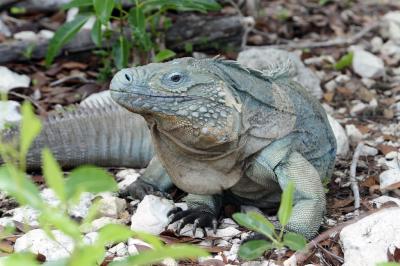
This is an adult Grand Cayman blue iguana on its namesake island. Decimated by a combination of habitat destruction, car-related mortality, and predation by introduced cats and dogs, the reptile numbered between 10-25 individuals by 2002. A recovery program -- assisted by health experts from the Bronx Zoo -- has brought the number of free-ranging iguanas within Grand Cayman's protected areas to more than 500 animals. Photo: Julie Larsen Maher/Wildlife Conservation Society

While thousands of species are threatened with extinction around the globe, efforts to save the Grand Cayman blue iguana represent a rarity in conservation: a chance for complete recovery, according to health experts from the Wildlife Conservation Society's Bronx Zoo and other members of the Blue Iguana Recovery Program.

Coordinated by the National Trust for the Cayman Islands, the Blue Iguana Recovery Program—a consortium of local and international partners—has successfully released more than 500 captive-bred reptiles since the initiative's inception in 2002, when the wild population of iguanas numbered less than two dozen.

"For the past several years, we've succeeded in adding hundreds of animals to the wild population, all of which receive a health screening before release," said Dr. Paul Calle, Director of Zoological Health for WCS's Bronx Zoo.

Fred Burton, Director of the Blue Iguana Recovery Program, said: "We expect to reach our goal of 1,000 iguanas in managed protected areas in the wild in a few years. After that, we will monitor the iguanas to make sure they are reproducing in the numbers needed to maintain the wild population. If we get positive results, we will have succeeded."

The Grand Cayman blue iguana is the largest native species of its namesake island, growing to more than 5 feet in length and sometimes weighing more than 25 pounds. The iguana formerly ranged over most of the island's coastal areas and the dry shrub lands of the interior before becoming endangered by a combination of habitat destruction, car-related mortality, and predation by introduced dogs and cats. The entire island's wild population in 2002 was estimated at only 10-25 individuals.

Recovery efforts to save the Grand Cayman blue iguana have mostly centered on the Salina Reserve, a 625-acre nature reserve located on the eastern side of the island. After being hatched and raised for a year or two in a captive breeding facility, each iguana receives a complete health assessment before release. This involves veterinarians taking blood and fecal samples for analysis, as well as weighing and tagging each reptile. The samples are analyzed in a nearby lab at the St. Matthews Veterinary School while sampling continues. The iguanas are released after the lab results are reviewed and health is verified. This year, the recovery program is releasing iguanas into a new protected area, the Colliers Wilderness Reserve, established last year and managed by the National Trust.


Read more!

Science discovery may raise rice yields

Scientists find rice 'chalk' gene, eye yield rise
AFP Yahoo News 19 Jul 11;

Scientists expect to soon be able to remove a chalk-like part of rice, dramatically raising global harvests amid rising demand for the staple, an international research outfit said Tuesday.

The International Rice Research Institute announced the breakthrough after a 15-year study on what makes rice chalky, which causes the loss of up to a fourth of grain content in milling, said spokeswoman Sophie Clayton.

The discovery follows a 2008 global crisis that saw the price of rice, the staple of half of the world, rise three-fold and pushing an estimated 100 million people into poverty.

"Within a few years, it might be possible to breed a chalk-free grain," Clayton told AFP in a telephone interview, citing the research team's assessment.

The chalky part of rice raises the chances of breakage during milling, cutting the amount that can be recovered and downgrading its quality, said the institute's nutrition research chief Melissa Fitzgerald.

"Until now, rice scientists did not know where in the rice genome the genes for chalkiness resided," Fitzgerald said in a statement issued by the Philippine-based institute.

She said field tests in eight countries isolated rice varieties with extremely low chalk, regardless of the growing environment, out of which major regions in the rice genome responsible for chalkiness were studied.

Rice prices shot up in 2008 after a combination of surging demand, bad weather and flattening yield gains.

The rice institute warned in May that a repeat of the global food crisis could not be ruled out amid rising prices for wheat, maize, sugar, and other farm commodities due to high demand and bad weather.


Read more!

Biofuel demand in US driving higher food prices, says report

Government support for ethanol has led to an increase in corn production and a steep rise in soybean imports
Suzanne Goldenberg guardian.co.uk 19 Jul 11;

Demand for biofuels in the US is driving this year's high food prices, a report has said. It predicts that food prices are unlikely to fall back down for another two years.

The report, produced by Purdue University economists for the Farm Foundation policy organisation, said US government support for ethanol, including subsidies, had fuelled strong demand for corn over the last five years.

A dramatic rise in Chinese imports of soybeans was also putting pressure on prices and supply, the report said.

Since 2005, a growing number of US farmers have switched to corn and soybeans from other crops. Farmers in other countries have also switched to corn but, the report said, the demand kept growing.

"In 2005, we were using about 16m acres [6.4m hectares] to supply all of the ethanol in the United States and Chinese soybean imports," Wallace Tyner, one of the authors said. It took 18.6m hectares (46.5m acres) last year, just to satisfy that demand.

The US department of agriculture reported earlier this month that US ethanol refiners were for the first time consuming more corn than livestock and poultry farmers.

It took 27% of last year's corn crop to meet the demand for corn ethanol. Only about 10% went to make ethanol in 2005, Tyner said.

The Centre for Agricultural and Rural Development at Iowa State University has estimated that 40% of the US corn crop now goes to make ethanol. But Tyner said the cobs and husks of corn used to make ethanol would go on to be used for animal feed.

The other driver of rising food prices was China, which has been building up its soybean reserves since the last big global food price rises of 2008.

But the report focused strongly on a US government mandate for ethanol production and $6bn (£3.7bn) in annual subsidies for ethanol refineries. Others have also been putting the corn ethanol industry in the spotlight.

In an interview with the Financial Times, General Mills, which produces Cheerios cereal, Häagen-Dazs ice-cream and other major brands, also blamed ethanol subsidies for driving up food prices. Ken Powell the company's chief executive said the price of corn and oats was up by 30 to 40% over last year.

"We're driving up food prices unnecessarily," Ken Powell, chief executive of General Mills, said in the interview. "If corn prices go up, wheat goes up. It's all linked."

Even if US ethanol production plateaus, as the report predicts, food prices are unlikely to recede – at least within the next year – because global soybean and corn crops are now in relatively tight supply.

The authors warned there just was not enough cropland available to shift to corn and soybeans.

"We don't think these prices are going to come down in a year," said Tyner. "It's going to take at least a couple of years to see a significant reduction in price."

The report warned that US corn and soybean stocks were also dangerously low, with the department of agriculture projecting supplies at about half typical levels.

"These are scary, scary numbers," said Christopher Hurt, another author. "The cupboard is absolutely bare. We just are going to get out of this, at least on the basis of crops for this year."


Read more!

Can Asia make it on non-nuclear options alone?

Simon Tay Today Online 20 Jul 11;

Japanese Prime Minister Naoto Kan has called for an end to the country's nuclear energy programme. This follows a similar pledge by German Chancellor Angela Merkel. Before the triple tragedy that struck Japan and problems with the Fukushima nuclear reactors, such decisions would have been unimaginable.

Predictions were instead for a nuclear energy renaissance, with the promise of abundant, cheap power that is low in carbon emissions. Post-Fukushima, long-standing minorities of anti-nuclear protestors have gained wider support in society.

But is going non-nuclear a workable policy? Or is it simply caving in to popular but temporary and perhaps overstated fears?

In Japan, Mr Kan's call is already facing opposition from pro-nuclear energy companies and Liberal Democratic Party opposition politicians. With his low poll ratings, some suggest neither he nor the policy will last.

Beyond the shadow of Fukushima, others across Asia must take into account a wider energy challenge. In the global financial crisis, worldwide energy consumption paused. But Asia continues to grow, despite the dour economic outlook in the United States and Europe, and so does its energy needs. Some talk of a power shift to Asia, but what is most certain is that Asians need more power.

Yet supply has been hit by uncertainties in the Middle East. Although we have not seen major disruptions, prices for crude oil are fluctuating, ranging up to US$120 per barrel, and most predict the long-term trend will be upwards.

Asia is not well positioned in this. The regional economies need but mostly are not self-sufficient in energy. China and India have few domestic energy sources, other than to use pollutive and carbon-heavy coal. Imports from the Middle East remain critical but look to be increasingly risky and expensive.

This sets the context for nuclear energy ambitions across Asia.

The Chinese intend to roll out the grandest nuclear power plant building programme seen in history. Countries in South-east Asia with no prior experience in large-scale, nuclear power generation - Vietnam, Indonesia, Malaysia and Thailand - plan to build their first plants.

Post-Fukushima, Beijing has called for a pause in order to relook at safety issues. Other Asians however continue to push time lines, notably Vietnam and Malaysia. In many cases, their own citizens are not consulted, despite public concerns over environmental protection, human health and safety.

The overarching context of energy policy seems lost in the anxiety to push ahead with nuclear plants. Vietnam, Indonesia and Malaysia continue to subsidise energy, increasing government burdens as oil prices rise. Their artificially low energy prices increase waste and destroy incentives to build new capacity, and invest in energy efficiency and alternative technologies.

Moreover, aside from China, others in Asia project only small percentages of their total energy needs will come from nuclear power. Indonesia targets to meet just 5 per cent of its needs from nuclear by 2025.

Given safety and security concerns, the South-east Asian nations seem to be risking a considerable amount for relatively small returns.

In contrast, studies suggest that energy efficiency measures can achieve at least the equivalent savings in power needs with safe, off-the-shelf technology at a much lower cost. Renewable energy currently costs more but with technological advances, may prove viable in the medium term.

It is in this context that Asians should watch what happens in Germany and Japan. Each derives around a hefty 30 per cent of its energy mix from nuclear. From this scale, it will take considerable effort to develop sufficient alternatives while keeping the lights on. Germany has already increased generation from renewable sources from 6 per cent in 2000 to some 16.5 per cent today.

It is not clear that these countries will persist and succeed. But if these two major industrialised economies can wean themselves off nuclear power, they can pioneer a path for others to follow to meet energy needs as their economies grow, while lowering carbon. From this, others in Asia can learn non-nuclear options.

For now, facing Asia's energy dilemma, policy-makers should consider a middle path. The option for nuclear energy need not be taken off the table until alternatives are demonstrated to produce sufficient, affordable and sustainable energy. But the other extreme to avoid is a headlong rush to nuclear power without a full and deliberate consideration of its full cost and potentially hazardous risks.


Simon Tay is chairman of the Singapore Institute of International Affairs. The SIIA's ASEAN and Asia Forum convenes on Aug 4 with a focus on economic opportunity, energy needs and environmental concerns in the region.


Read more!

Best of our wild blogs: 19 Jul 11


Singapore Biodiversity: An Encyclopedia of the Natural Environment from Raffles Museum News and Otterman speaks

A history museum for all ages
from The Straits Times Blogs by Grace Chua

23-24 Jul (Sat-Sun): More biodiversity talks this weekend
from Celebrating Singapore's BioDiversity!

Wild Boar Day
from Adventures with the Naked Hermit Crabs

Coralline Record in Singapore Botanic Gardens
from Flying Fish Friends

PUI Goes the Spitting Spider
from Macro Photography in Singapore

Argh! I can’t stand the trash on Lim Chu Kang beach!
from Toddycats!

poaching kayakers @ SBWR 17July2011
from sgbeachbum and R.I.P. Great-Billed Heron @ SBWR

Sentosa Serapong quickly
from wild shores of singapore


Read more!

Resorts World Sentosa's Marine Life Park develops education programme

Sea Research Foundation and Resorts World Sentosa Ink a Multi-Faceted Agreement to Bring Mystic Aquarium Expertise and The JASON Project Science Programs to Asia
Agreement will focus on developing education programs for Resorts World Sentosa’s Marine Life Park located in Singapore
Business Wire 18 Jul 11;

SINGAPORE--(BUSINESS WIRE)--Sea Research Foundation, which oversees The JASON Project science programs in collaboration with the National Geographic Society, has entered into an agreement with Resorts World Sentosa (RWS), Singapore’s first integrated resort, to jointly develop a marine environmental curriculum for students in Southeast Asia. Contents of the curriculum will be drawn from Sea Research Foundation’s Mystic Aquarium, distinguished for its marine animal research and husbandry expertise.

As part of the three-year agreement, Sea Research Foundation, a global leader in marine research, deep-sea exploration and hands-on education, and the National Geographic Society will join forces with RWS’ new Marine Life Park (MLP) in Singapore to bring the award-winning JASON Project science programs to students in the region. The MLP will become the exclusive manager for The JASON Project in Southeast Asia, and Mystic Aquarium will assist in developing comprehensive pre-school to tertiary school programs at the new MLP.

The JASON Project is an internationally acclaimed multi-media science program that works collaboratively with schools and teachers to create hands-on and multi-media learning experiences in classrooms. The JASON Project was developed by the National Geographic Society and is now managed by Sea Research Foundation in collaboration with the National Geographic Society.

“Set to be a world-class park with a strong focus on education, research and stewardship, we are honored to be working with RWS and its MLP,” Dr. Stephen Coan, president and CEO of Sea Research Foundation said. “We share a deep commitment to engaging young people and learners of all ages in the importance of marine conservation and the fundamentals of science as a means for understanding the ocean environment.”

Mr. Tan Hee Teck, president and CEO of RWS, said: “We are very committed to research and education, and this focus is paramount as we move toward completing and opening our new Aquarium and the MLP. Our collaboration with Mystic Aquarium and The JASON Project – both globally renowned entities of the Sea Research Foundation - as well as the well-respected National Geographic Society, will put us in the forefront of science, conservation and education programs dedicated to our oceans and marine life. These programs will undoubtedly yield important resources for the students of Singapore and other Southeast Asian nations.”

Programs will include travelling teacher experiences that will take place in schools, on-property education programs, and interpretative and hands-on learning experiences.

The MLP and Sea Research Foundation will also collaborate on various biological research programs. Sea Research Foundation specializes in studying the immune systems of marine mammals and the correlation between marine mammal immune response to human health issues. The MLP team of veterinarians, marine mammal specialists and curators will provide additional expertise and support to expand such research.


Read more!

Encyclopedia celebrates wealth of Singapore's flora and fauna

Straits Times 19 Jul 11;

IT MAY be a small country, but Singapore has more than its fair share of different plants and animals.

Yesterday, an encyclopedia was launched to celebrate the island's exciting biodiversity.

With more than 1,500 entries, it is Singapore's first comprehensive reference to its flora and fauna, and celebrates almost 200 years of natural history study here.

Featured in the encyclopedia are species that do not exist anywhere else, such as the Singapore freshwater crab, and others that are critically endangered like the Singapore whiskered bat.

'Contrary to expectations, there are species in Singapore that are found nowhere else in the world, and they should be protected,' said Professor Peter Ng, one of the academics behind the book.

He estimates that Singapore may have more than 40,000 species of plants and animals, which he says is a big number for a small country.

Prof Ng added that he hopes to encourage Singaporeans to cultivate an interest in local creatures and plants, rather than concentrating only on those in other countries, such as pandas.

Called Singapore Biodiversity: An Encyclopedia Of The Natural Environment And Sustainable Development, the book was launched at the National University of Singapore (NUS) by President S R Nathan.

The first part contains essays on Singapore's natural environment and conservation efforts, while the second is an A-Z guide to its biodiversity.

NUS president Tan Chorh Chuan said at the launch: 'This collection provides a detailed record of the key changes that have taken place in our environment over the past two centuries.

'It also highlights what must be done to preserve our natural heritage for future generations.'

The encyclopedia project was started by Prof Ng, director of the Raffles Museum of Biodiversity Research, and Professor Leo Tan, director of special projects at the NUS Faculty of Science.

It took more than three years to compile and involved 65 contributors from academia, government agencies and environmental activist groups.

The encyclopedia was funded by $1.1 million of donations from firms such as Exxon Mobil Asia-Pacific and the Lee Foundation, as well as private entrepreneurs Sam Goi and Oei Hong Leong.

Prof Ng said he hopes the book will find its way into school and university libraries in Singapore over the next six months to a year.

He is also hopeful for the future of the plants and animals featured in the encyclopedia.

He said that despite the changes development has wrought on Singapore's landscape, 'if the policymakers and planners do things correctly and they plan correctly for sustainable development, there is still hope.

'We're still finding more (species), the story is not finished'.

JOANNA SEOW

Guide to Singapore's biodiversity launched
Sara Grosse Channel NewsAsia 18 Jul 11;

SINGAPORE : A comprehensive guide to Singapore's biodiversity was launched on Monday.

It is the country's first encyclopedia on Singapore's natural history and heritage.

The encyclopedia - "Singapore Biodiversity" - was launched by President S R Nathan along with key stakeholders of environment conservation in Singapore.

Those present included the Environment and Water Resources Minister Dr Vivian Balakrishnan, MP for Tampines GRC Mah Bow Tan, and Ambassador-At-Large at the Foreign Affairs Ministry, Professor Tommy Koh.

Initiated by two National University of Singapore (NUS) professors, the encyclopedia has information from 65 contributors.

They come from academia, government agencies and environmental activist groups.

The production of the publication is supported by a S$1.1 million fund raised through donations.

From insects to flora and fauna, virtually every known living organism in Singapore is featured in the book.

The 552-page encyclopedia took three years to complete, and charts almost 200 years of natural history study in the country.

And it was quite an effort compiling information from so many contributors.

Professor Peter Ng, general editor of "Singapore Biodiversity", said: "That was a challenge. Getting all these guys together. And then reading it, editing, and checking to make sure the facts are correct.

"Another problem of course was that we always assumed that there was a whole amount of information already gathered that was easy for us to access and then just take and then edit. No. A lot of the information that we gathered for these chapters turned out not so easy to get."

Professor Ng said the core of the encyclopedia is its collection of essays.

They detail Singapore's ecosystems, past and present research, and tackle issues of climate change and public policy.

It also includes interviews with former ministers. The contributions include interviews with Mr Mah, former National Development Minister; Information, Communications and the Arts Minister Dr Yaacob Ibrahim, who was the former Environment and Water Resources Minister; and George Yeo, former Minister for Foreign Affairs.

The encyclopedia will serve as a resource material for scientists, policy makers and educationists.

But contributors are also hoping the book will strike a chord with young Singaporeans.

Professor Leo Tan, director of special projects at the Faculty of Science at NUS, said: "They are the custodians, they are responsible for the environment that they have to live in, raise their children in and maintain that quality of life."

The book will be on sale at bookstores islandwide from July 19, and will retail for S$65.

- CNA/ms


A guide to Singapore's biodiversity
Esther Ng Today Online 19 Jul 11;

SINGAPORE - He does not hate animals but Professor Peter Ng belongs to the camp which feels pigeons, mynas, crows and stray cats should be culled.

These fauna, along with the sparrow and the American red-earred terrapin sold widely in pet shops, are alien to Singapore's natural habitat, argues the National University of Singapore (NUS) conservation biologist.

"They compete with our native species of birds and other animals for limited resources like food and space," said Prof Ng, one of the editors of the first encyclopaedia on Singapore's biodiversity.

With the launch of the 552-page tome, Singapore Biodiversity - An Encyclopedia of the Natural Environment and Sustainable Development, by President S R Nathan yesterday, Prof Ng hopes that more Singaporeans will be more aware of the island's rich biodiversity.

What makes this encyclopaedia different is that it does not just label animals and plants but provides a context on sustainable development and showcases what Singapore has done right or wrong in the past, said Prof Ng.

Professor Leo Tan, another editor of the book, noted non-native species were brought in by people by trains and boats in the past. But today, legally imported pets pose bigger problems because of the sheer number that make their way into the wild when pet owners tire of their pets and abandon them, added the director of special projects at the NUS Faculty of Science.

For instance, feral cats have been known to contribute or even cause the extinction of many species of animals. While Prof Ng does not have data on how many of the urban cat population have turned feral, he believes that they would pose a threat to native species if their numbers are left unchecked.

It would be "good if we start neutering as many stray cats as possible, as well as chip all pet cats so owners cannot let them go when they no longer care or let them roam all over", he said. "There are a lot of cat lovers and humane folks out there but we need to have a check and balance. If there are too many stray and feral cats - what they have to remember is that other animals will have to die to sustain them."

Animal welfare proponents have argued that stopping the pet trade will diminish the incidence of pet abandonment but Professors Ng and Tan feel this is not possible as Singapore practises free trade. The alternative is to educate people to be more responsible pet owners.

But the Cat Welfare Society and the Action for Singapore Dogs, saying that this approach is not effective, has called for sterilisation of strays to be stepped up.

Alien species are not limited to animals but flora as well. The commonly seen water hyacinth has the potential to indirectly alter soil water content, nutrient cycling and to modify the habitat.

Prof Tan said: "Alien species now dominate most non-forest areas and freshwater habitats here."

200 years of Singapore's flora, fauna captured in book
Joanna Seow Straits Times 18 Jul 11;

SINGAPORE'S biodiversity is more exciting and surprising than most people may think, if a new encyclopedia here is anything to go by.

'Contrary to expectations, there are species in Singapore that are found nowhere else in the world, and they should be protected,' said Professor Peter Ng, director of the Raffles Museum of Biodiversity Research and one of the three editors of Singapore Biodiversity: An Encyclopedia Of The Natural Environment And Sustainable Development.

The book, which is Singapore's first comprehensive reference to local flora and fauna, celebrates almost 200 years of natural history study here.

It was launched at the National University of Singapore (NUS) on Monday afternoon by President S R Nathan.

National University of Singapore president Tan Chorh Chuan said at the launch: 'This collection provides a detailed record of the key changes that have taken place in our environment over the past two centuries.'

'It also highlights what must be done to preserve our natural heritage for future generations,' he added.

New species featured in Singapore eco book
my paper AsiaOne 19 Jul 11;

WITH its beautiful purple speckled shell measuring just 2cm in width, this species of crab had gone unnoticed along Singapore's shoreline until it was discovered last year.

The Lee's Purple Marine Crab (Leelumnus radium), named after the Lee Foundation, was recently classified under a new genus or family of species.

It is not the only creature discovered here recently.

The Jade Tree Snail (Amphidromus atricallosus temasek) - also known as the Temasek Tree Snail - was recently determined to be a new subspecies. It is believed to be found only in Singapore.

Readers can expect to find such nuggets of information in a new book called Singapore Biodiversity - An Encyclopedia Of The Natural Environment And Sustainable Development.

The landmark publication, which summarises what has taken place in the environmental scene in Singapore over the last 200 years, was launched yesterday at the National University of Singapore (NUS) by President S R Nathan.

Minister for the Environment and Water Resources Vivian Balakrishnan was also present at the event.

The 552-page hardcover publication is the combined effort of 65 contributors, including academics and environmental activist groups here. Published by Editions Didier Millet, the encyclopedia was edited by NUS faculty members Peter Ng, Richard Corlett and Hugh Tan.

NUS president Tan Chorh Chuan said: "This collection provides a detailed record of the key changes in our environment over the past two centuries. It also highlights what must be done today to preserve our natural heritage for future generations."

It took three years to complete the encyclopedia, which was supported by a $1.1-million fund raised through donations from ExxonMobil Asia Pacific, Keppel Corp, Lee Foundation, Ngee Ann Kongsi, Mr Sam Goi and Mr Oei Hong Leong.

Comprising two parts, the first part of the book is a collection of essays and features offering a detailed introduction to Singapore's natural environment and conservation efforts.

It covers Singapore's natural environment, such as its climate and terrain; past and present research; and issues such as climate change.

The second part is as an A-Z guide of 1,500 entries covering virtually every known organism found here.

The book is available at NUS libraries and public libraries.

Life in an urban jungle
New book showcases the more than 40,000 native species of flora and fauna here
Chang Ai-Lien Straits Times 23 Jul 11;

AGAINST all odds, nature abounds in spectacular diversity in our midst.

Urban Singapore is teeming with wildlife, as the country's first biodiversity encyclopaedia shows in bounteous detail.

Filled with photographs, the 552-page book showcases everything from abalone - there are seven species here - to zooxanthellae, single- celled plants living in the tissue of corals.

Sixty-five scientists, nature experts, policymakers and environmental activists produced the mammoth tome, which also chronicles successes, threats and losses in wildlife conservation here.

The book took three years to compile and was brought to life by conservation champions Leo Tan and Peter Ng, professors at the National University of Singapore's (NUS) Faculty of Science, with the help of a chief adviser, Ambassador-at-large Tommy Koh.

'Bit by bit, this story came together, and it was a story worth telling,' said Prof Ng, who also heads the Raffles Museum of Biodiversity Research. He was one of the book's editors, together with Professor Richard Corlett and Associate Professor Hugh Tan, his colleagues.

Its chapters cover the environmental scene in the country over the last 200 years, how it has tried to balance the often conflicting needs of economic development, conservation and preservation of natural heritage, and its hopes for the future.

Singapore Biodiversity - An Encyclopedia Of The Natural Environment And Sustainable Development also comes with an A to Z guide on virtually every known organism here.

The Republic is home to more than 40,000 native species of flora and fauna which have survived despite extensive habitat destruction.

Prof Tan noted that even biologists and scientists from overseas found this hard to believe, and were quick to underestimate Singapore's rich natural treasure trove.

'Then when they are finally convinced to come here to collect specimens, whether insects or crabs or coral, they are surprised time and time again.'

He added: 'The book also paints the landscape of Singapore's future and will hopefully inspire young people to play a role in shaping it.'

Indeed, some young people will get a chance to do so soon, as a result of the book's publication.

Donations towards producing the encyclopaedia - from ExxonMobil Asia Pacific, Keppel Corp, the Lee Foundation, Ngee Ann Kongsi and businessmen Sam Goi and Oei Hong Leong - were matched by $1.1 million in government funding, which will go into an endowment fund for a new Bachelor of Environmental Studies degree at NUS.

The undergraduate course is being developed and will be taught by professors from eight faculties, with the first batch of 50 students starting next month.

NUS president Tan Chorh Chuan noted that today's environmental issues are complex, spanning many fields.

The programme would nurture graduates who are able to think deeply and broadly, he said, and help to develop novel solutions for Singapore and beyond.

Prof Leo Tan added: 'Each faculty contains experts in their own fields with their own priorities.

'Getting this diverse group together was something of a miracle, but it was necessary because the environment cannot be dealt with by one person or group.'

The book, which was launched on Monday by the university's chancellor, President S R Nathan, is on sale at major bookstores for $65 (excluding GST).


Read more!